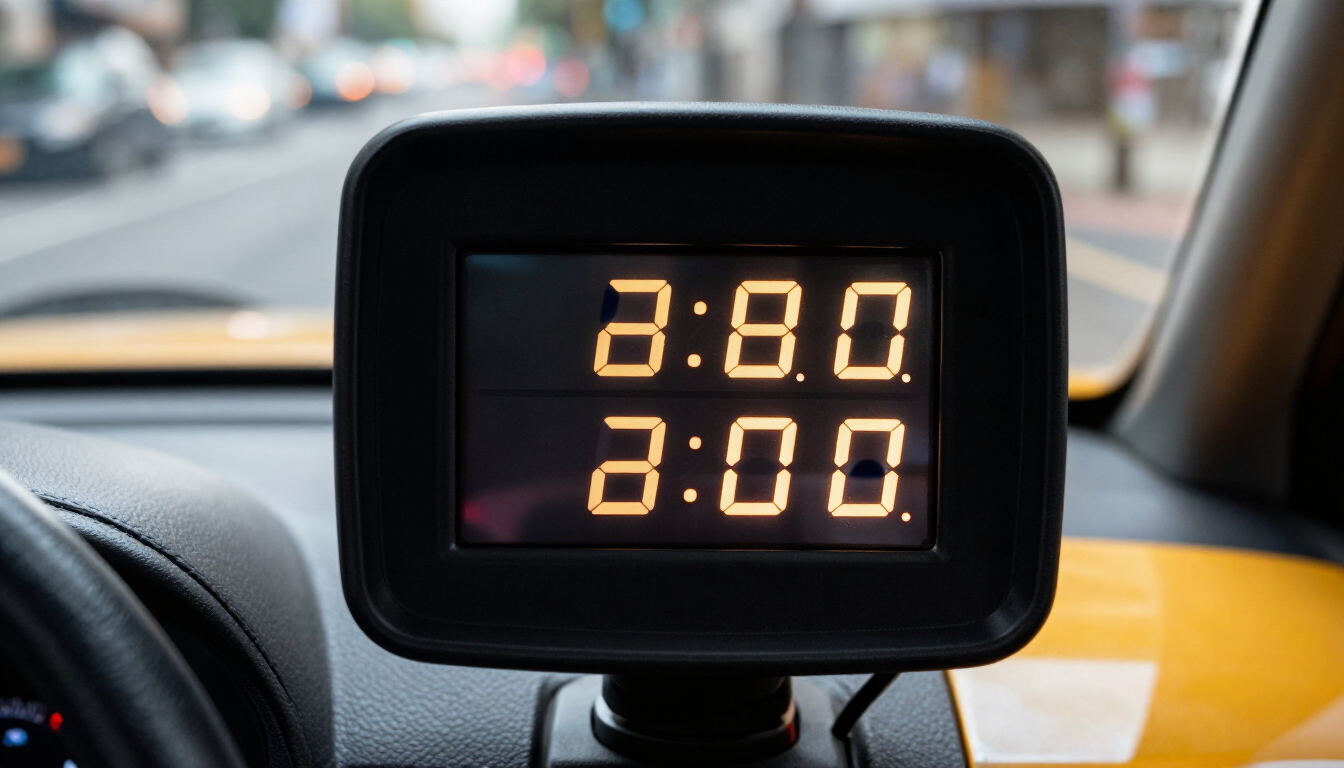
When you hop into a taxi, the meter starts ticking the moment the driver pulls away from the curb. That final number is not random — it is the sum of three core components working together: a base fare, a distance rate, and a time rate. Understanding how these pieces interact is the first step to predicting what you will actually pay.
The three building blocks of a taxi fare
Almost every regulated taxi system in the world uses the same three-part formula. The base fare (sometimes called a flag drop or initial charge) is a fixed amount you pay the moment the trip begins. On top of that, you pay a rate per unit of distance — usually per mile or per kilometer — and a rate per minute of time spent in the vehicle.
The distance rate applies while the car is moving at a reasonable speed. The time rate kicks in when the vehicle slows down or stops, such as in traffic or at red lights. Most meters switch between the two automatically based on the speed of the car, which is why a trip through heavy traffic can cost noticeably more than the same distance on an empty road.
The basic fare formula
In its simplest form, a metered fare looks like this: Base Fare + (Distance × Rate Per Mile) + (Time × Rate Per Minute). That is exactly the calculation our cab calculator runs in real time as you type. Enter your trip distance, an estimated time, and the local rates for your city, and you get an instant estimate before you ever step into the car.
Why estimates differ from the meter
Even with the correct rates, your estimate can drift from the final metered fare. The route the driver takes may be longer or shorter than you assumed, traffic may be heavier, and waiting time at pickups or drop-offs adds up. Some cities also apply a minimum fare, which overrides the calculated total if it falls below a set threshold. Our calculator accounts for all of these variables, including a minimum fare field, so your estimate stays realistic.
The meter in the vehicle is always the final source of truth for regulated taxis. But knowing the formula behind it gives you a powerful tool: the ability to spot an overcharge, compare options, and budget your trip before you travel.
Estimate your own fare
Put these tips to work — calculate your next taxi fare in seconds with our free cab calculator.
Open the calculator