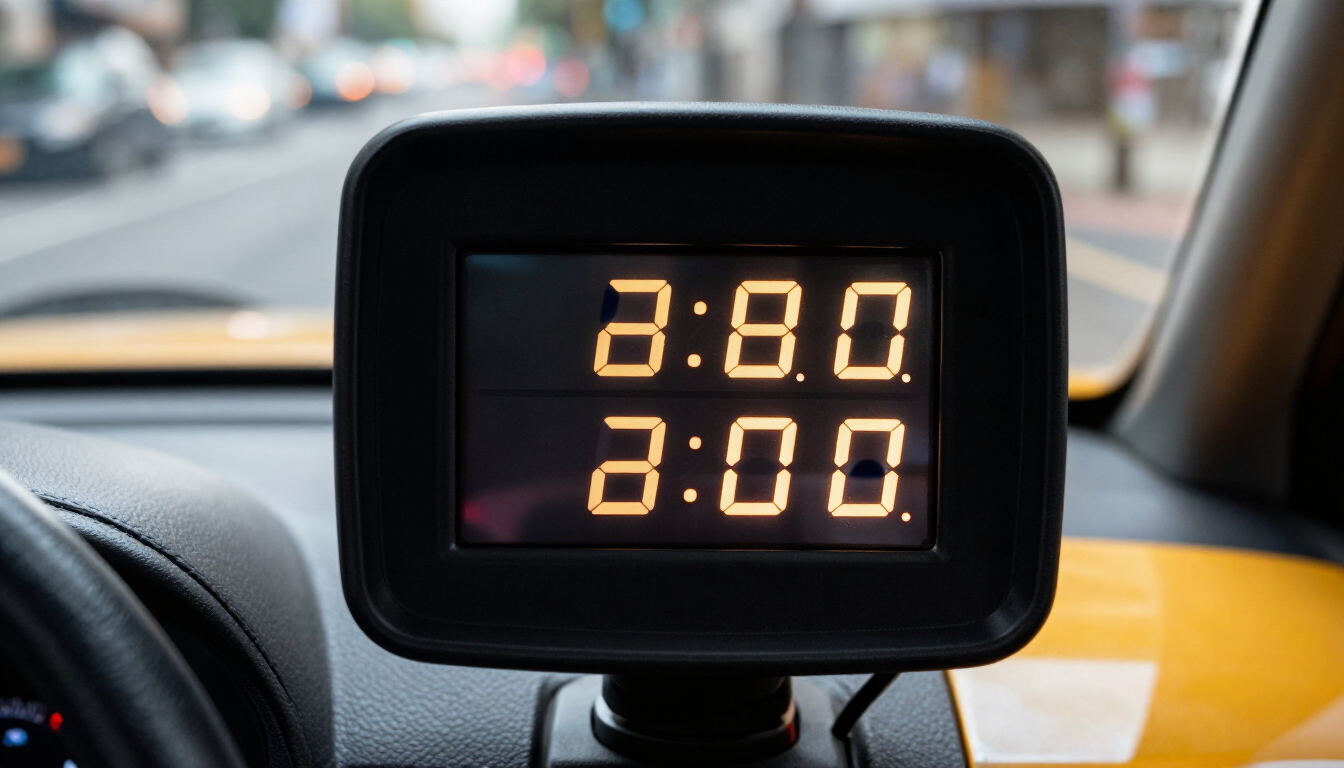

A ride home at 2 AM often costs more than the same trip at 2 PM. There are two distinct reasons for this, and they come from completely different pricing systems. Understanding both will help you predict late-night fares and avoid sticker shock.
Regulated night surcharges on taxis
Many cities apply a fixed night surcharge to licensed taxis — an extra flat fee or a higher rate per mile that applies during late-night hours, typically from midnight to early morning. This is a regulated, public rate set by the local taxi commission. It exists because fewer drivers are willing to work overnight, and the surcharge keeps the service available when demand would otherwise go unmet.
Dynamic surge pricing on rideshare apps
Rideshare platforms take a different approach. Instead of a fixed fee, they apply a surge multiplier that scales with real-time demand. On a quiet Tuesday at 3 AM the multiplier might be 1.0x, but on a Saturday night or after a large event it can climb to 2.0x or higher. The same trip can cost twice as much simply because more people are requesting rides at the same moment.
How to estimate a late-night fare
Our calculator handles both models. If you are taking a licensed taxi, check the night surcharge box and enter the flat fee your city charges for overnight trips. If you are comparing against a rideshare app, leave the night surcharge off and instead set the surge multiplier to match the multiplier shown in the app. The calculator applies whichever you choose to the full distance and time calculation, so you see the adjusted total before you commit to the ride.
A useful tip: late-night surge tends to spike suddenly and fade just as fast. If you can wait fifteen or twenty minutes, checking the rideshare multiplier again — or comparing it against the regulated taxi fare using the calculator — can save you a meaningful amount on the way home.
Estimate your own fare
Put these tips to work — calculate your next taxi fare in seconds with our free cab calculator.
Open the calculator